W3. Protein Design
Assignment Description
Part A. Protein Analysis
1. Answer any of the following questions:
How many molecules of amino acids do you take with a piece of 500 grams of meat? (on average an amino acid is ~100 Daltons)
500 g (1 kg / 1000 g) (1 Da / 1.66 * 10 ^ -27 kg) (1 amino / 100 Da) = 3 * 10^24
Why are there only 20 natural amino acids?
“The point where nature was unable to create new unique tRNAs that would not be mistaken for others seems to have been at 20 amino acids.” (Source)
Why are most molecular helices right handed?
It’s more stable due to intramolecular properties. (Source)
“The right-handed alpha helix is energetically more favorable because of fewer steric clashes between the side chains and the main chain.” (Source)
Where did amino acids come from before enzymes that make them, and before life started?
They came from a combination of simple molecules that existed when Earth was first formed, and some kind of energy (e.g. lightning). The interaction between these elements created amino acids and other organic compounds. (See Stanley Miller and Harold Urey's experiments.)
What do digital databases and nucleosomes have in common?
Nucleosome: A form of DNA packaging where DNA is wound around 8 histone proteins.
This allows cells to fit DNA into the cell nucleus. In a sense, a nucleosome is like a database because the data is the DNA and the nucleosome dictates how it’s stored in a cell.
2. Pick any protein (from any organism) of your interest that has a 3D structure and answer the following questions.
Protein: Green Fluorescent Protein from aquarius victoria (uniprot link)
Briefly describe the protein you selected and why you selected it.
I'm interested in fluorescence and in engineering fluorescent things. GFP makes things glow and comes from jellyfish. (And is a staple part of biological research to boot.)
Identity the amino acid sequence of your protein.
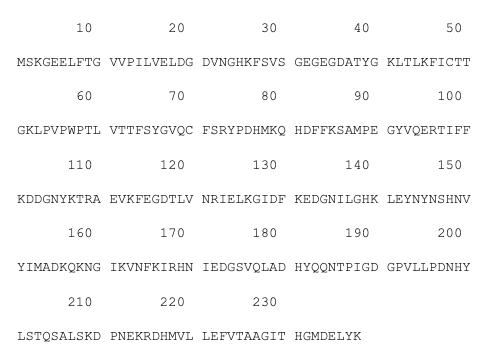
How long is it? What is the most frequent amino acid?
238 amino acids long. G (glycine) is the most frequent amino acid.
How many protein sequence homologs are there for your protein? Hint: Use the pBLAST tool to search for homologs and ClustalOmega to align and visualize them.
100 homologs from BLAST.
Does your protein belong to any protein family?
Yes. The GFP family. (http://pfam.xfam.org/family/PF01353.22)
Identify the structure page of your protein in RCSB
https://www.rcsb.org/structure/1W7S
Does your protein belong to any structure classification family?
Yes, the "fluorescent proteins" family. https://scop.berkeley.edu/sunid=54514>
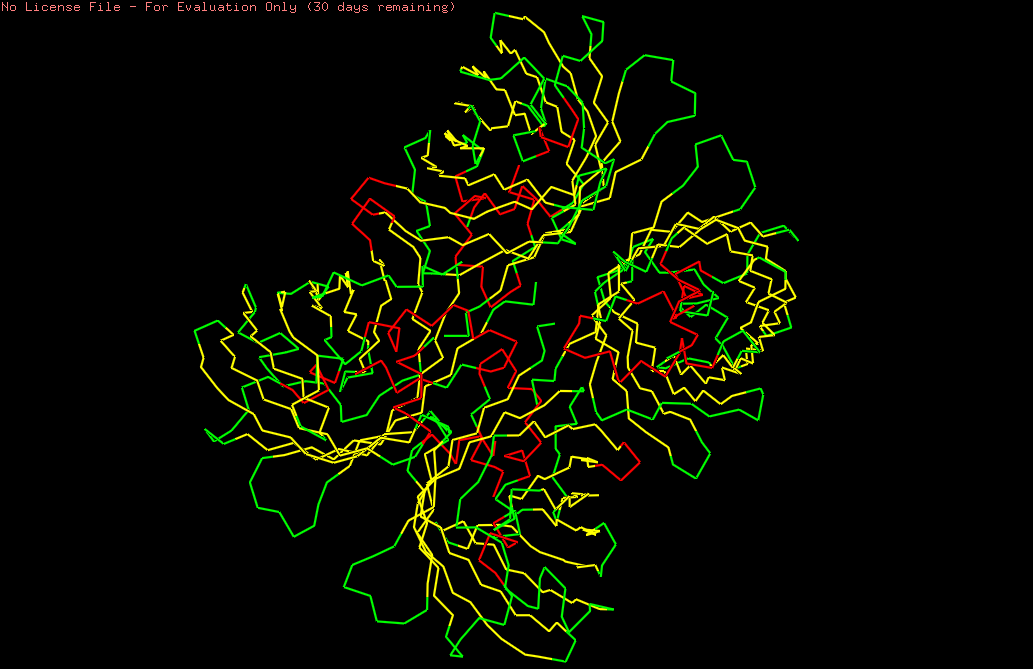
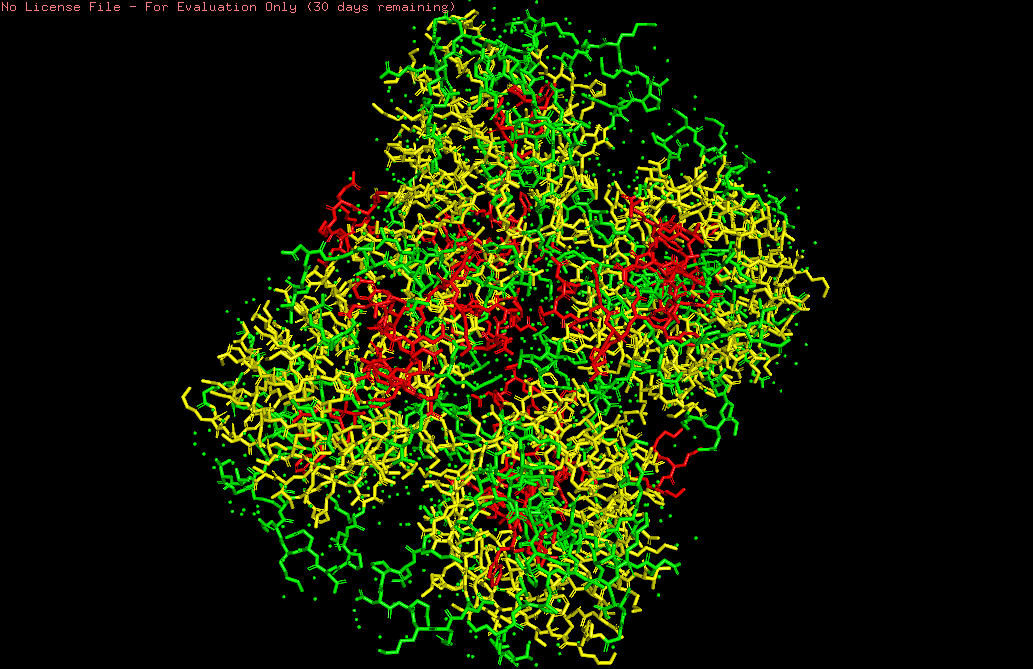
Open the structure of your protein in any 3D molecule visualization software. Visualize the protein as "cartoon", "ribbon" and "ball and stick".
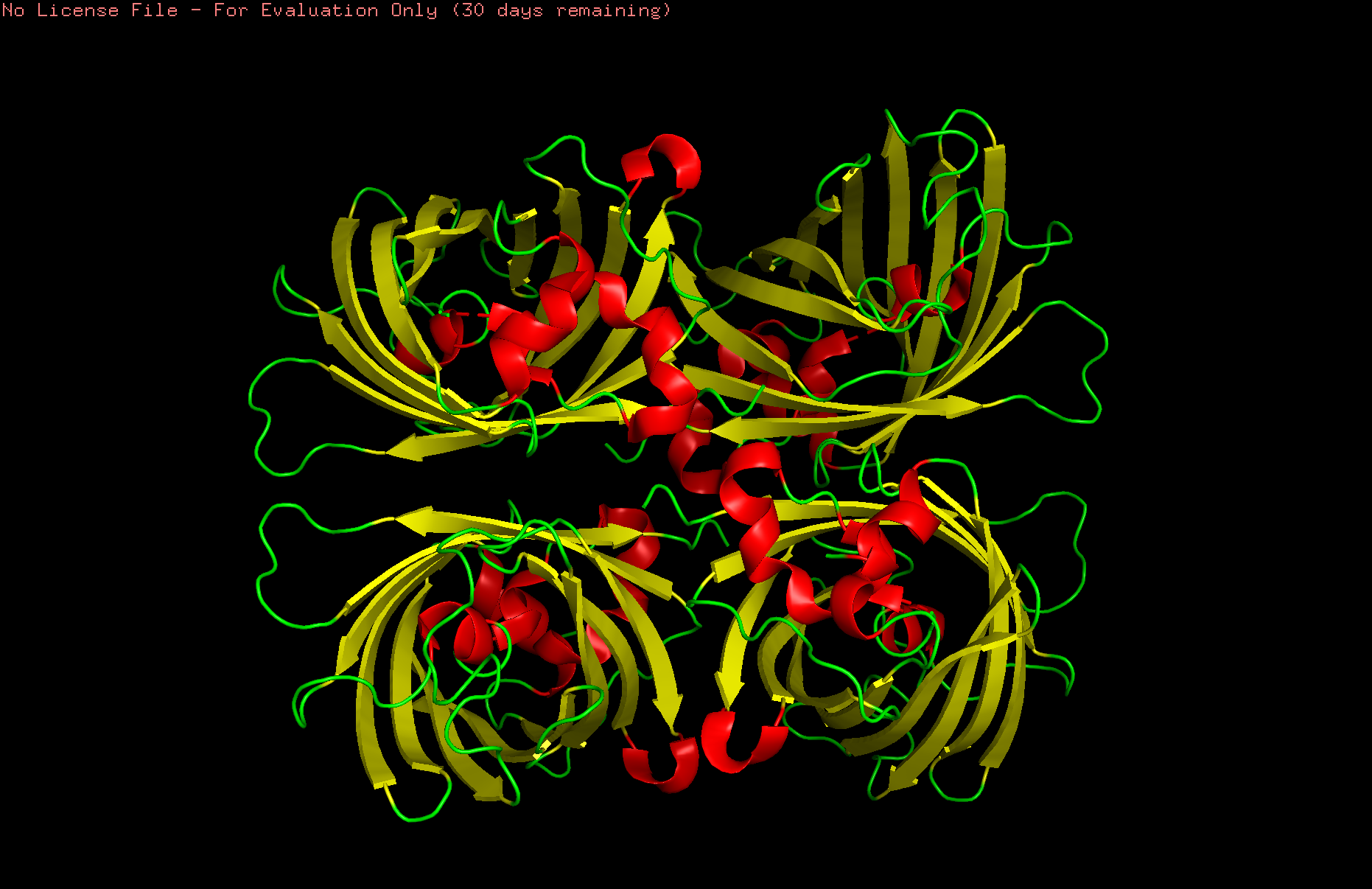
Cartoon
Ribbon
Ball and Stick
Color the protein by secondary structure. Does it have more helices or sheets?
Sheets (see the "cartoon" image above).
Color the protein by residue type. What can you tell about the distribution of hydrophobic vs hydrophilic residues?
TBD.
Visualize the surface of the protein. Does it have any "holes" (aka binding pockets)?
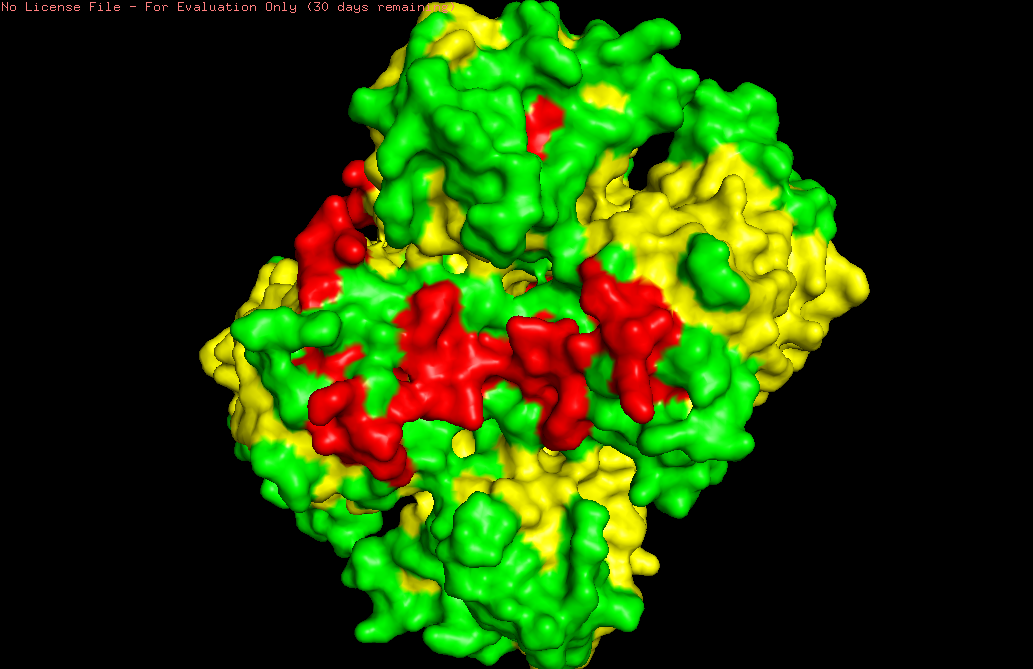
Yeah, a "hole" lot. Har har har.